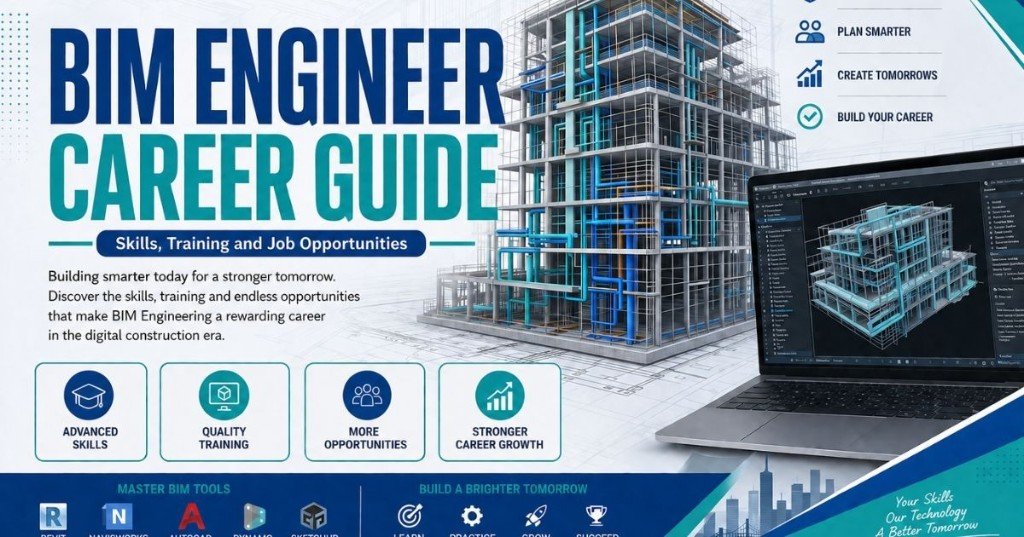
Introduction
The construction and architecture industries are rapidly evolving with the integration of advanced technologies. One of the most transformative innovations is Building Information Modeling (BIM). As a result, the demand for BIM Engineers has significantly increased across the globe. If you're considering a career in this field or looking to upgrade your skills, this comprehensive BIM Engineer career guide will help you understand everything—from required skills and training to job opportunities and career growth.
What is a BIM Engineer?
A BIM Engineer is a professional who uses digital tools and software to create and manage detailed 3D models of buildings and infrastructure projects. These models are not just visual representations; they include data related to design, construction, and operation, making project management more efficient.
BIM Engineers work closely with architects, structural engineers, and construction teams to ensure that projects are designed accurately and executed smoothly. Their role is crucial in reducing errors, saving costs, and improving collaboration.
Why Choose a Career as a BIM Engineer?
Choosing a BIM career comes with several advantages:
- High Demand: BIM professionals are in demand in countries like India, the UK, the USA, and the Middle East.
- Attractive Salary Packages: Skilled BIM Engineers can earn competitive salaries.
- Global Opportunities: BIM skills are globally recognised.
- Technological Growth: Work with advanced tools like Revit, Navisworks, and AutoCAD.
- Career Stability: The construction industry consistently requires skilled BIM professionals.
Essential Skills Required for a BIM Engineer
To succeed as a BIM Engineer, you need a combination of technical and soft skills.
1. Technical Skills
- Proficiency in BIM software such as Autodesk Revit, Navisworks, and AutoCAD
- Understanding of construction and architectural principles
- Knowledge of 3D modelling and drafting
- Familiarity with clash detection and coordination
- Basic knowledge of structural and MEP (Mechanical, Electrical, Plumbing) systems
2. Analytical Skills
- Ability to interpret complex data
- Problem-solving skills for design conflicts
3. Communication Skills
- Strong collaboration with multidisciplinary teams
- Ability to present design ideas clearly
4. Project Management Skills
- Time management
- Understanding project workflows and deadlines
Educational Qualification and Training
Academic Background
To become a BIM Engineer, you typically need a degree or diploma in Civil Engineering, Architecture, or Mechanical Engineering.
Professional Training
Specialised BIM training is essential to gain practical knowledge. A good BIM course should include:
- Autodesk Revit Architecture, Structure, and MEP
- Navisworks for coordination and clash detection
- Real-time project experience
- Industry-based assignments
Short-term certification courses (3–6 months) or advanced diploma programmes can help you gain hands-on skills and improve employability.
Popular BIM Software Tools
Here are some widely used tools every BIM Engineer should learn:
- Autodesk Revit: Core BIM software for modelling
- Navisworks: Used for project coordination and clash detection
- AutoCAD: Essential for 2D drafting
- SketchUp: Helpful for quick 3D modelling
- Dynamo: Used for automation within BIM workflows
Mastering these tools will give you a competitive edge in the job market.
Job Roles and Responsibilities
A BIM Engineer performs several important tasks:
- Creating detailed 3D models of buildings
- Coordinating with architects and engineers
- Performing clash detection and resolving conflicts
- Preparing construction documentation
- Managing project data and updates
- Ensuring compliance with project standards
With experience, you can move into higher roles such as BIM Coordinator, BIM Manager, or Project Manager.
Job Opportunities for BIM Engineers
The demand for BIM Engineers is growing rapidly across multiple sectors:
- Construction Companies: Large construction firms require BIM professionals for project planning and execution.
- Architectural Firms: Architects use BIM for designing complex structures efficiently.
- Engineering Consultancies: BIM Engineers help in structural and MEP design coordination.
- Infrastructure Projects: BIM is widely used in roads, bridges, railways, and smart city projects.
- Overseas Opportunities: Countries like the UK, UAE, Canada, and Australia have a high demand for skilled BIM professionals.
Salary of a BIM Engineer
The salary of a BIM Engineer in India varies depending on factors such as experience, skill level, location, and the company you work for. With the growing demand for BIM professionals in cities like Hyderabad, Bangalore, Mumbai, and Delhi, salary packages have become increasingly competitive.
1. Fresher (0–1 Year Experience)
Fresh graduates or beginners entering the BIM field can expect:
- ₹15,000 – ₹30,000 per month
- ₹1.8 LPA – ₹3.6 LPA (per annum)
Candidates with strong software skills in Revit, Navisworks, and AutoCAD, along with training certifications, may earn on the higher end of this range.
2. Junior BIM Engineer (1–3 Years Experience)
With some hands-on project experience, professionals can earn:
- ₹3 LPA – ₹6 LPA
- Monthly salary: ₹25,000 – ₹50,000
At this stage, engineers usually work on live projects, coordination tasks, and clash detection.
3. Mid-Level BIM Engineer (3–6 Years Experience)
Professionals with solid experience and advanced skills can expect:
- ₹6 LPA – ₹10 LPA
- Monthly salary: ₹50,000 – ₹85,000
They often handle project coordination, client communication, and team support roles.
4. Senior BIM Engineer / BIM Coordinator (6–10 Years Experience)
Experienced professionals can earn:
- ₹10 LPA – ₹18 LPA
- Monthly salary: ₹80,000 – ₹1.5 Lakhs
They lead teams, manage large-scale projects, and ensure quality and standards in BIM workflows.
5. BIM Manager / BIM Consultant (10+ Years Experience)
Top-level professionals in BIM roles can earn:
- ₹18 LPA – ₹30+ LPA
- Monthly salary: ₹1.5 Lakhs – ₹2.5+ Lakhs
These roles involve strategy, implementation of BIM processes, and high-level project management.
Career Growth Path
A BIM career offers excellent growth opportunities:
- BIM Modeler (Entry-level)
- BIM Engineer
- BIM Coordinator
- BIM Manager
- Project Manager / BIM Consultant
With continuous learning and experience, you can move into leadership roles or even start your own consultancy.
Tips to Start Your BIM Career
- Choose a reputed BIM training institute
- Focus on hands-on practice
- Build a strong portfolio of projects
- Stay updated with industry trends
- Learn multiple BIM tools
- Work on real-time projects or internships
Future Scope of BIM
The future of BIM is very promising. With the rise of smart cities, digital construction, and sustainable building practices, BIM will play a crucial role in shaping modern infrastructure. Governments and organisations worldwide are adopting BIM standards, increasing the demand for skilled professionals.
Conclusion
A career as a BIM Engineer is an excellent choice for those interested in construction, design, and technology. With the right skills, training, and dedication, you can build a successful and rewarding career in this field. As the industry continues to grow, BIM professionals will remain at the forefront of innovation in construction and engineering.
Start your BIM journey today and become a part of the future of smart construction! Explore GDH Academy BIM courses or contact us to begin your training.